Monday, March 11, 2024

The Fastest Shaker


The Fastest Shaker


By Alan Smason

From out of the West Bank
A legend was made
Of the fastest shaker 
In the bartending trade.

He could shake a cocktail
With little or no stress,
Add the garnish and a straw
Without a hint of duress.

With his trusty shaker, 
His strainer and his spoon
He made strong men weak;
He made women swoon.

This man without peer,
A mixologist like no other,
His drinks were so good,
Made you slap your own mother.

He teamed up with his woman
And they opened up a bar.
Their fame spread through the city,
People came from afar.

Their "Revel" served libations
But they also cooked some food, 
A great menu serving late night
For whatever was your mood.

Through the years the fastest shaker
Served his neighbors in Mid-City
Spinning tales of the cocktails
That were charming and were witty.

Today we sing his praises
For this man who just can't miss.
With Laura by his side, we
Sing "Happy Birthday!" to Chris.

©2024 Alan Smason


Monday, December 4, 2023

Haiku


I wanted to write
A haiku for the ages
Turns out, I could not.


– Alan Smason

Sunday, September 3, 2023

Confronting Mortality

"Sentence of Death" by John Collier  ©1908 Photo courtesy of the Wellcome Collection

It's now been nearly two years since my mother of blessed memory passed away. It has been a constant reminder that my time on this planet is limited and will be of a yet to be determined length. I am now in a position to enjoy my life and choose freely what it is that I truly want to do.

But the fact is I do miss her terribly.

I have no illusions. I am almost 70 with a number of interests that keep me constantly busy, yet there is a gnawing feeling that I am keeping myself occupied because I have no one whose life interests me beyond my own and more than those other pursuits. My sister calls me a narcissist. I say I am lonely. We're probably both right.

Since I created it, this blog has always been my most personal, creative outlet for releasing my feelings about a great many things. But the one thing I have yet to consider fully is my own pending mortality. 

I've always had great pluck. That's the term Baden-Powell referred to Scouts who were always cheerful and ready to render assistance to others. In truth I should have never deviated from achieving Eagle Scout, but I made a conscious choice in seventh grade that I needed to concentrate on my bar mitzvah. Imagine how that plays out today when I do so much work with the National Jewish Committee on Scouting and the National Association of Masonic Scouters (NAMS) to help others achieve the rank of Eagle Scout.

Eagle Scout is all about establishing goals in life and seeing them through to completion.

I have now realized a number of goals I could not have imagined 20 years ago. I am an acknowledged theatre critic and a TV personality for the past nearly 13 years. I am the publisher or webmaster of several websites that keep me constantly challenged and I have just completed a three-year position as president of the American Jewish Press Association.

So where to from here? While I am still the president of NAMS, that term of office will end in less than a year and I have only a few remaining months to achieve a lasting legacy for that organization, much of which was obscured due to the COVID pandemic. Once again, man plans and G-d laughs.

I have determined that more than anything else I want to travel. I want to see places I've read about and I want to experience life on this wonderful world with a childhood abandon that only death itself will stop. I am off on a whirlwind adventure and I want to see what else is out there before I have my final breath and release my mortal coil. 

This will not be a cheap endeavor, but to do less would be costly to my inner soul. I feel like Tony in "West Side Story." Something is coming. 

It makes me very excited to know that I can do this at an age that many of my contemporaries are not able to do. I am lucky that I have not so many aches and pains as others. I still have all the original parts working. My hearing is still very good and while my vision is not perfect, my corrective lenses still afford me a good view of my surroundings. The extra package I am carrying around my belly shows that my sense of taste and smell have also not been diminished much. 

So I am off. I am embarking on the first of several planned excursions of what I hope will afford me the memories of a lifetime in what limited time I have left. I hope to circumnavigate the globe and have many tales to tell while still maintaining my other interests. Let's see how this first journey turns out. I am curious to see if the extra effort and cost I am paying is worth the experiences. I truly hope I have made an excellent choice, but it's all about the mystery of life. 

We never know if the choices we make are predetermined by G-d. I would like to think they are and that there is a great protector who knows better than me about what I should be doing with my life. Being productive is doing His work. Being nice is making the world a better place. Using my felicity of writing will make others feel and think about things they may have considered too, but didn't put down in print.

I've never had illusions about my effectiveness as a writer. I know I can write better than most, but I am not elevating myself above others like Shakespeare, Hemingway, O'Neill and Keats whose abilities have established them as luminaries for past and future generations. Reading has always been key to writing and I enjoy reading well crafted works, whether they be novels, plays or poetry.

So for now, I am signing off. Hopefully, this missive will be the first of several to come of logs of my journeys to come. I need to do this desperately. 

Perhaps, on one of these journeys I will find that someone who will make me slow down and concentrate on her (and us). But in the meantime I must say Bon Voyage! 

Monday, September 19, 2022

On Becoming an Orphan

Annette Smason, center, with son Alan, left, and daughter Arlene, right.

For 67 years I knew the constant love and dedication of the woman who bore me. I depended upon her for my sustenance as an infant and for my protection as a toddler. During my tender years, she shielded me and protected me from the hurt that others might have brought upon me and she defended me when my actions required a benevolent hand.

As I matured, she did what she thought best for me, sometimes it was really what was best for her. But no matter, she was always my lynchpin. Even when she was problematic, she was my problem and I dealt with it.  After my father passed away, we became inseparable. It was what many might consider a controlling relationship, but as the years went by, it became obvious that I was needed to help her through life's major and minor travails. 

We dined together most nights for more than 25 years, not because she wanted my company, but because she needed a chauffeur and someone to fend for her. She was not capable of ordering for herself, so I did it for the two of us. She was not capable of ordering correctly and steadfastly refused to eat more than half of what was brought to her.

In the past, I would allow her to pass the leftover food to me and it helped me with not having to decide what to eat for lunch the next day. But after Hurricane Katrina and my diaspora from New Orleans for almost two years, I began to keep kosher at my home.  Everything she ate out was not allowed inside my home. She would still pack the other half of her meal and would now leave it for whoever was at her home the next day. She never ate leftovers.

In the larger scheme of things, dealing with leftovers or having to eat out every night are not big deals. I dealt with it and kept a brave face as I enabled her. My sister, who lived in Cleveland, began to be more involved with her after her New Year's Eve stroke in 2019. It was not a particularly well-timed medical incident as she was transported against medical orders to a hospital best equipped for gunshot and knife victims and not suited to helping stroke victims. Her doctor did not have admitting or medical privileges there either. She was in the hands of Medical School students for the most part, many of whom were on holiday duty with a scant staff. 

Once she came home, her options were very limited. My sister decided she would not live long in a skilled nursing facility, due to her nature. She opted for in-home hospice care instead. Her demeanor became much more agitated and confused. My very presence would cause her blood pressure to rise by several points for no reason. It was very troubling, but I remained aloof. I was there for her if she needed me, even though we no longer ate out any longer.

The last 19 months of her life were a slow and steady decline, punctuated by at least one other stroke. Had Hurricane Ida not deprived her of electricity and air conditioning, she might have survived a few more months and made it to her 90th birthday.

But now she is gone and I am bereft. The pain of her departure from this world still persists to this day, the first anniversary of her passing. Watching the funeral and commitment ceremony for Queen Elizabeth II today recalls within me just how terribly much I miss her.

May her memory be forever a blessing. 


Tuesday, September 7, 2021

SIMANIM

Why do we eat apples and honey? 
It’s an answer you all need to hear. 
Like the honey, the apples are sweet 
 To ensure for us all a sweet year.

But that's not all of the foods
That we eat at the head of the year.
While simanim are ritually eaten,
Their meaning is not always clear.

So, let us start with Rosh Hashanah
If that is what you would wish.
Rosh is the word meaning "head."
That's the reason for the head of a fish.

Symbolically, we often eat dates.
T'marim is the word in Hebrew.
The letters suggest the word "end"
Of bad things that make us feel blue.

Even the challah we eat at our meals
Is round, not oval, for a reason.
It reminds us that a year, like a circle,
Continues from season to season.

Now pomegranates, that is a mouthful.
The rabbis say each of those seeds
Is an opportunity to do mitzvahs –
What we all know as doing good deeds.

in Yiddish the word meren means two things
It means increase, but it also means carrots.
So we eat carrots in the hope that this new year
Will see increase in our worth and our merits.

The last item on the menu is your selection
The pri chadash or "new fruit" you must choose.
That completes the cycle of new foods
That are sampled at new year's by Jews.

©2021 Alan Smason


Saturday, August 1, 2020

Condiments


Condiments


I asked the man for mayonnaise

He gave me mustard instead.

I told him I prefer white, not yellow

To sit upon my bread.


To see him look at me in disgust

As he handed me that jar

Made me wonder what it was I did;

Had I really gone too far?


But, no, I was in my rights to say:

“I do not like that spread.

And as for ketchup, I confess

I just don’t like that red.”


“Some would grab a packet or two

Of spicy barbeque;

But brown is ugly and not right.

I see it. Why can’t you?”


“Relish on a sandwich with a shade like green

Is not understandable.

And orange is a color I won’t allow

To pass my mandible.”


“That Thai satay is much too brown

And srahacha is just too pink

Salsa is crimson; it’s out too.

That’s just the way I think.” 


“’You are what you eat,’ as the pundits say,

Which is why I won’t eat black.

 The colors of the rainbow may appeal to you,

But they’re not what I will snack.”


“So out with chutney and out with honey

They will never be on my diet.

Just give me my white mayonnaise

Or I will not be quiet.”


The man with the mustard heard my thoughts,

But I was shocked by what he said.

“I don’t hate those condiments half as much

As the color of your bread.”


©2020 Alan Smason

Thursday, July 23, 2020

The Worst of Times

CHARLES DICKENS 
Dickens needs a rewrite. "It was the worst of times. It was the worst of times." I'm sorry, but this pandemic has turned me from the most hopeful of optimists into the most despairing of pessimists. 

What started out as a reasonably expectant period of one, two or three months of sequestration has dragged on now through a fourth with no end in sight. 

What began with just a trickle of cases of coronavirus in February rapidly increased to a scenario where hospitals were bursting at the seams at the end of March and early April. Nursing homes shuttered as the virus began to ravage elderly populations most at risk from the disease. Outside visitors there and access to prisons were denied to all but essential employees. Personal protective equipment (PPE) including masks, gowns and gloves were in such high demand that hospital workers and frontline medical staffs were asked to reuse the items against common practice and safe and sage medical advice. 

Spare ventilators became the rarest of medical items and states competed openly on both the worldwide market and within a system for federal allocation of these life-saving devices. Doctors were fearful they would have to decide which of the sick were more deserving than others to receive vital health services. Would a 75-year-old cancer patient be passed over if a 29-year-old athlete were also sick? Epidemiologists predicted overrun ICUs and emergency rooms bursting at the seams. Doctors, nurses and medical administrators worried about which patients they would have to turn away.

It was a national nightmare.

But then, people began to respond. They stayed home. They washed their hands regularly and became mindful of not touching their faces. When they did journey out to a store for food or water, many of them wore masks so they wouldn't spread the virus if they had it. They wiped down their bags and washed off milk cartons. Schools shut down and students came back home. This was a picture of a united America that, like hard-ravaged Italy and Spain, was intent on keeping the future infection rate and deaths down.

A steady decline occurred. At one point, New Orleans held an unenviable position as one of the worst rates of infection in the country. It now boasted a remarkable turnaround. No one ran out of ventilators and a field hospital located in the Ernest Morial Convention Center set up strictly to treat COVID-19 patients, was shut down. Clearly, several markers showed remarkable progress being made in the city and throughout the state. Still, the death toll was huge.

Louisiana prepared to enter Phase I of a return to pre-pandemic normalcy. The numbers of available testing kits went up and more and more people were testing to see if they were infected. The crisis seemed to have abated, even though the death toll continued to rise.

But then, around the time of Independence Day, Louisiana began to take its eye off the ball. Residents outside of New Orleans began to let down their guard. They gathered without masks and celebrated the nation's birthday with abandon. Large numbers of residents openly questioned the wisdom of wearing masks, relegating it not to a health matter, but to an exercise of political freedom.

The infection rate began to climb again and with it more deaths. 

Recent news reports suggest the state's previous reports in April may have been underreported by a much as 16 times the actual incidence of infection. Another recent day showed more than 3,000 cases of COVID-19 as having been recorded, a record that stretched all the way back to the end of May.

We are making progress, but it is in the opposite of our desired direction. Instead of being squarely into Phase III, we are still in Phase II throughout Louisiana and the City of New Orleans has pushed back on an easing of regulations for bars and gyms so that they are either closed or are only operating at the 25% capacity allowed under Phase I. 

Many businesses are on life support and many others, like world famous K-Paul's Louisiana Kitchen, have announced plans to shut down entirely. Federal subsidies to keep employees hired and unemployment benefits for millions of Americans are all running out within days.

On top of all of this we have an ongoing  national discussion on Black Lives Matter, how to reshape policies that unfairly profile segments of our society and how to stop systemic racism. Mobs tearing down Confederate statues are understandable, but those that select targets like the Lincoln Monument need to check their motives.

Then there's a presidential election going on too. In a normal election year, tensions would be heightened and rhetoric would be sharply up. This year is no different and, indeed, medical life-saving measures such as wearing a mask have become highly politicized. As we move toward November, this national discussion will become more contentious. 

If there is one department, where hope remains high it is in the spirit of Americans to rise above the derision and to connect through social media and apps like Zoom. If we are ever to come out of this fray with our heads held high, it will be because of our listening to one another and becoming part of the solution, not continuing the problem.

So, Dickens was wrong. It is the worst of times and the worst of times. How we deal with it may help shape what America looks like on the other side of our recovery. And when we do look back on this, may we recall that it is a far, far better thing that we do than we have ever done before.


Thursday, March 19, 2020

Cabin fever coronavirus style

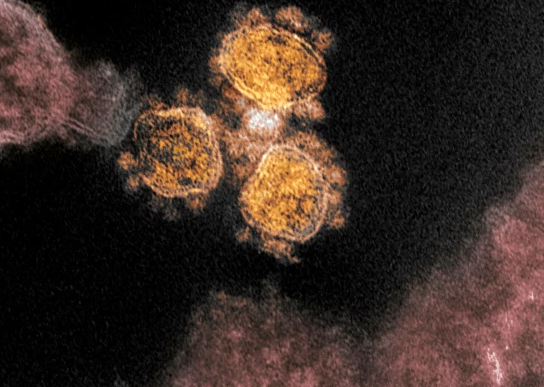
Seen under an electronic microscope, the virus that causes COVID-19.

You can't see it. You can't smell it. You can't taste it or hear it approaching. And if you should touch it, you won't even know that you did until two weeks later. That's a pretty accurate assessment for what we are all fighting with the threat of COVID-19 (coronavirus).

For good or bad, we have taken collective action in what may prove to be a judicious application of resources available to us now or, conversely,  might later be viewed as a set of grossly overprotective and unnecessary medical measures. In any case, I would rather err on the side of overkill rather than be caught unprepared and unable to respond to this very real threat.

The danger to me personally is minimal. I am at the age where authorities say I should be concerned, but I am in very good health and have a better than average immune system. The threat is not only to me; it's to my elderly loved ones and friends, most especially my 88-year-old mother, who is now in frail health.

I would not want to put her at risk due to my careless and unthinking actions. Also, who knows? Statistically, most victims have been elderly patients. Yet, the first two people who have died in New Orleans since the outbreak of COVID-19  were both in their 50s, one 58 and the other 53 years old. While they did each have underlying medical problems, the threat to middle-aged adults is very real. One of the more recent victims – a member of my own religious community – was 84. Others were octogenarians and nonagenarians. That does not give me a reason to be consoled in any way.

The problem for me is that I am by nature a very gregarious creature. I enjoy meeting people and talking, walking and greeting them. I find nothing more frustrating than to keep myself entertained and in a virtual bubble.

But this is the new normal and I am going to have to make the necessary adjustments to accept this as both necessary and in the best interests of all concerned.

Except for take out, there's no restaurants. No bars. No parades. And, for me, the worst reality check, no theatre. For a theatre critic, the thought of how to cope is almost surreal. Given the lack of open theaters, it is understandable that the public would be less focused on the plight of the actors, producers, technical and administrative staffs who collectively are the grease behind the monolith of local theatre.

But theatre is the salve that calms society in hard times and we need it during this crisis more than ever. The sooner theatre is restored to our city, the sooner we will know we have weathered this storm and moved past it.

Saturday, October 19, 2019

For Leigh


You were just a kid when we met
I wore my hair high and wide.
And you were still a blonde –
And not yet a bride.

Our love of music sealed the deal
You just had to sing out loud.
I knew what I liked to play
And you made me proud.

The blues you found in your soul
Would flow out from your heart
And mine would quicken its pace
Whenever you would start.

You sang on table tops
You sang on a makeshift stage
The crowds would gather for you
Your name became the rage.

Through the times we lived,
We suffered great loss.
You through division
And mine with a cross.

But the progeny you had
Meant love would survive
The red-headed mama
In her joy was alive.

You practiced your art
And drew crowds late at night
You slept through the day
Dosed, dazed – a sight.

But there was glassy truth
In your voice of purple hue
You reigned o'er the land
And then they crowned you.

When the waters rose high
You were chased far away
Another blue called out
And there you would stay.

So the Queen was in exile
And her sullen people mad
The times were brown, dead
Interminably sad.

When the dipsy pain raged on
You fought it with pride
You gave us the truth
You never had lied.

When out in the hemlock
You floated into mist
Into the aether of the heavens
With love you were kissed.

I miss you, my darling
Your haughty hands, your smile.
We are destined to reunite.
Just wait. Wait a while.

©2019 Alan Smason

(Photo ©2018 Winston-Salem Journal)


Wednesday, September 4, 2019

To blog or not to blog?


It's been more than a year since I posted to this blog.  For a very long time this was my sole outlet for writing my most personal of musings and insights. It was where I felt there were no barriers for me to make comments, lash out or to release in cathartic fashion whatever it was that was foremost on my mind.

The fact is I have many more outlets to write these days and the time to delve into my inner psyche has become limited in more ways than I can readily admit. My writing has brought me awards in journalism I could never have envisioned three years ago. I have seen my stock rise high despite the fact that my value as a writer is still under appreciated and barely compensated.

Of course, writing a blog rarely leads to untold wealth or riches. What has been essential in these postings is that I write the truth as I see it, unfiltered or unaffected by the opinions of others.

In these days of highly charged politics and ultra sensitive social media trolls, it has become increasingly difficult to feel comfortable to speak my own mind.

And yet, I must.

If there ever was a time when I should be speaking out about the climate under which America lives these days, it is now.

We have become so intolerant of each other that an errant phrase on social media can bring about immediate doom to celebrities and politicians alike. Of course, there are some politicians who are Teflon-coated, who it seems escape scrutiny and condemnation despite egregious rantings. Again, these are the times under which we live.

But Tweets and viral posts notwithstanding, I am finding myself discomfited in the lack of a sense of humor in America today. I am afraid that few can recall Will Rogers and his simple take on what made our country and our people great. Even the affable and kindly Fred Rogers would take exception as to how hardened our nation has become and how we have passed the innocence of our most precious resource – our children – into the flames of fear and mistrust and tempered them with credos of greed and self-absorption.

Perhaps it is the knowledge that our government has separated innocent children from their parents and imprisoned them without the benefit of trial and a sense of fair play. Maybe it is the senseless loss of life at places like night clubs, supermarkets, movie theaters, outdoor concerts, shopping malls, workplaces or any place where gatherings of people enjoying life or going about their business become soft targets and part of an ever spiraling list of mass shootings by assault rifles.

The rise of organized hate by small-minded men and women who blame the ills of the world on religions or people whose skins are a different hue is something I could never have fathomed as a child. We had fought two world wars stamping out the designs and encroachment of foreign powers on faraway shores in the first and halting the spread of governments that fostered genocide and glorified killing in direct conflict with our ideals of freedom and liberty in the second.

During the Cold War, I believed that the good of humanity promoted within a system of capitalism where individuals could better themselves would eventually defeat the premise of Communism that  men had to share what they earned or wait for the government to parcel it out. That belief turned into reality in the 1990s and America seemed to be a beacon for the world again.

I would never have considered that the America of my youth could fall from its pedestal of being the leader of the Free World and a moral nation that others would want to emulate and morph into a nation led by the super rich and super greedy with corruption and amorality as its most prominent features.

We have become a litigious society where juries are awarding incredible sums of money to victims of corporate greed which have addicted thousands in order to fatten their wallets or who have looked the other way when putting products on the market. There is little chance that tort reform will reign in the rampant filings by hungry attorneys hoping to find their pot of gold at the end of the judicial rainbow.

Doctors are also under siege by self-appointed financial wizards who have managed to administer health organizations on their behalf and perpetuated a system wherein they realize greater profit by denying benefits to those in dire need. Medical malpractice costs have forced many physicians who might have established solo practices in the past into forming corporate partnerships as a measure of self-preservation and protection. The days of a kindly Marcus Welby, M.D., who makes house calls is sadly over. Instead, new concepts like urgent care centers have sprung up and patients are paying visits to emergency rooms in droves due to the demands of insurance policies.

Health care has become a major determinant in keeping a job or seeking employment elsewhere and programs like Medicare are having to raise the age levels of those seeking benefits. It is not beyond the realm of possibility that my child will have to wait until 70 years of age or higher to qualify for Medicare.

As a boy, I was a Cub Scout and Boy Scout. Even the simple nature of Scouting for boys and girls has become shrouded in controversy. For decades, the Boy Scouts of America (BSA) was vilified for its standards for adult leaders and youth which prevented gays from entry into its membership. After protracted legal challenges and a historic plebiscite by its members, those policies were eliminated and membership extended to those who had formerly been shunned.

Today, the BSA and the Girl Scouts of the U.S.A. (GSUSA) are embroiled in a new legal battle over which gender belongs with what organization. Facing historic lows in membership, the BSA announced plans two years ago to open its entire ranks to girls, notably in the Cub Scouts and the newly-renamed Scouts BSA (formerly the Boy Scouts). Even though co-ed units are the standard around the world, including in England, where Scouting was founded, the GSUSA has challenged the BSA in court.

Due to that battle and the inordinately burdensome task of paying out millions to victims of alleged child abuse, the BSA has already announced its own plans to declare bankruptcy should they need to protect their assets. Many alleged victims of abuse have recently been given a second chance to charge individuals and organizations by legislation passed on a state level such as in California, New York and New Jersey. Victims need to be compensated, of course, but in many cases the problems arose within religious organizations who partnered with the BSA and the alleged incidents occurred as far back as four decades ago. Sadly, many of the offending adults were often sheltered by those who wished to not visit scandal or shame upon their religion and the BSA was never informed of these crimes at the time they occurred.

Throughout the course of writing these words, I feel the same outrage as when our nation was shaken to its core through assassinations and divided by waging a war on many fronts in Southeast Asia and against each other at home.   

Those were certainly not the good old days, but even then I knew we would get better as a nation and move past the division and derision. These days I am not so sure.

We have never become more connected through devices and the media that update us as to our world in ways we could only have imagined two decades ago. Yet, despite this connectivity, we are a nation of lonely people, seeking to live out life vicariously through these devices while hardly lifting up our heads to acknowledge one another at the dinner table.

Thus I find myself sitting at a computer adding more words to the blogosphere while mulling all of this over.

Am I being authentic and genuine? Yes.

Will these musings convey my angst and disdain for where we are as a nation? Probably.

Do I feel better? Maybe.

Does any of this make sense? Doubtful.

Saturday, July 14, 2018

Among the hills, amidst the critics

When summer meets the rolling, unglaciated hills of Wisconsin, the heat and humidity inextricably rise in the land Frank Lloyd Wright called home. The songbirds sing out and the mosquitoes buzz in their mad bloodthirsty dash at twilight and dawn in Spring Green for as certain as the season is the promise of hundreds of anxious patrons looking forward to the outdoor spectacle of theatre at American Players Theatre (APT).

With such an appropriate acronym, APT continues to mount stellar productions in two theaters - one, a 1,089-seat outdoor amphitheater and the other, an intimate indoor arena of more than 200 seats. With an annual budget of more than $6 million and a dedicated core staff, the company's repertory of as many as nine plays attracts more than 100,000 people to this quaint and sleepy town from June through November.


In recent years, the American Theatre Critics Association (ATCA), the professional organization of theatre reviewers, writers and journalists, has held its annual conference in cities like San Francisco, Philadelphia and New Orleans. This summer, however, they have taken to the Wisconsin woods to partner with APT so that its membership could take advantage of five of its offerings: Shakespeare's As You Like It, Eugene Ionesco's Exit the King, Athol Fugard's Blood Knot, George Fuquhar's The Recruiting Officer and Garson Kanin's Born Yesterday.

In addition to the lifeblood of theatre offerings, APT has brought dozens of its own staff and nearby theatre critics, artistic directors, theatre podcasters and designers to inform and inspire ATCA attendees. Among the topics covered were sessions on copyright law, racial equity, period comedy productions and what is happening in the heartland of theatre in America's dairyland.

The beautiful setting of The House on the Rock Resort replete with a Bobby Jones-designed golf course has served as the nexus for ATCA's members to engage in heated debates about the future of the organization and its direction. Members are passionate about the organization, but in these perilous times when traditional journalism has given way to modern means of expression on the Internet and through social media, there are questions that must be posed and the very nature of theatre criticism examined.


Saturday, June 9, 2018

That last unthinkable act

We lost two very industrious, highly visible celebrities this past week; two souls who were successful in so many ways.

Spade (via Wikimedia)
Even I knew the value of a Kate Spade handbag. In the world of fashion, her name was one that had secured a place reserved for only the best. Yet, despite the outward appearance of a woman who had made it and who could rest on her laurels for decades, there was something gnawing at her. Family members must have known she was depressed, but no one suspected the depth of her feeling of hopelessness. No one knew she would seek relief from her tortured existence through that last unthinkable act.

And now she is gone.

As for Anthony Bourdain, a man who loved and embraced food and cuisine with a passion that took him to the far reaches of the globe and back, there is disbelief.

Bourdain (Photo by Jessie Wightkin)
How could a man with so much to live for, who gave so many others pleasure from the verve with which he approached the simple act of eating, cast it all aside? Bourdain's job was almost too perfect. He was paid by CNN to travel to the backwater eddies of the planet as well as the most opulent of gustatory galleries to revel in dining and to share his experiences with a starving world of vicarious TV viewers


He was charming and endearing, but he was also demanding. He expected no less than the best that life had to offer and the matter of fact way he shared his experiences, eating his way across the globe established a place for him that few in his industry achieved. But, as he admitted in his book, "Kitchen Confidential," he did have his inner demons, having successfully fought drug addiction and coming back stronger, emerging as an industry leader. He was a champion for the food scene in New Orleans and we loved him for that, too. Despite his success, he was still intensely troubled and filled with such despair that he, too, thought the unthinkable.

And now he is gone.

Williams (Photo via Wikimedia)
When comedian Robin Williams committed suicide in 2014, he did so by hanging as did Spade and Bourdain. Perhaps the most creative comic mind of his generation, Williams brought mirth and laughter to audiences and to his peers for decades. He could bring joy to a small child or happiness to a nonagenarian with his over-the-top frenetic gyrations on stage and delighted millions with his on-screen performances. He created Mork and Mrs. Doubtfire and showed us what a grown-up Peter Pan might look like, imbuing all of his characters with a humanity that made us love him. Yet, despite an Academy Award and fame that brought him financial well-being, he, too, suffered from depression and could only reach for a rope to bring an end to his tortured existence.

And then he was gone.

But in the end, it was not just him.

Lederman (Photo by Alan Smason)
In the week that followed Robin Williams' demise, suicide ideation shot up a whopping 75%. One of those who took his life was my friend, supporter and one of the most beloved of my high school classmates, Louis Lederman. Not many people were more animated than "Louie," the son of Holocaust survivors. How could anyone whose family had endured the horrors of the Nazi era and had clung tenaciously to stay alive simply give up everything? It was as if the Nazis had won. A talented traditional jazz drummer, he organized the Bone Tone band that marched in Mardi Gras parades and was the onetime Boss of the Phunny Phorty Phellows. There were few like Louie.

And then he was gone.

Suicide rates have risen by 30% in the last two decades and health authorities are buckling down, expecting another wave of attempts in these next few days. It is important that we look to signs that might portend one of our loved ones is suffering from the same kind of misguided thinking. The world will not be better served through these cruel and cowardly acts. Cruel because their deaths hurt those they leave behind and cowardly because, rather than confront life, they give in to a solution that fixes nothing and oftentimes makes matters worse.

Please keep an eye out for your loved ones this week. The National Suicide Prevention Hotline number is 1-800-273-8255. Get help to those that need it.


Friday, May 25, 2018

The Iron Lady of New Orleans

When news reached me of the death of Jackie Pressner Gothard on Monday morning, May 21, the very first thing that went through my mind was that it must have been a trick or some sort of fantastic jest to test me. There was no warning. No bulletin rang out in advance preparing me for her sudden disappearance. She was a pillar of the New Orleans community one moment - a woman of indomitable will and gracious Southern charm - and then she was a memory.

But what a memory she leaves behind.

Jackie Gothard at the re-burial of seven Torah scrolls in 2011. 
Jackie Gothard was the consummate cheerleader, the never-say-die, larger-than-life character who, quite literally, saved my synagogue and embodied renewed hope for Jewish New Orleans in the wake of Hurricane Katrina. Jackie was the spirit of the new Congregation Beth Israel, erected phoenix-like on the ashes of more than 100 years of Orthodox Judaism in New Orleans.

It was her life's mission to never let anyone forget the history of Beth Israel or its tragic demise beneath the murky floodwaters from the breached 17th Street Canal following the landfall of the monster storm. She made the decision to bring the lifeless synagogue back from the dead, even while she was an evacuee in Houston and the news out of New Orleans was nothing less than bleak.
That was Jackie. She was always organizing and planning. She made certain that there was only one High Holiday period that the members of the synagogue under whose shadow she had grown up near the heavily Jewish corridor along Dryades Street, would be without a building in which they could assemble, pray and, let us not forget, eat.

Jackie employed her son Eddie, himself a former Beth Israel president, to get on the phone with the Orthodox Union, the United Jewish Communities (now the Jewish Federations of North America) and anybody else who would listen. Beth Israel was coming back, she would tell them. Orthodox services for Rosh Hashanah and Yom Kippur were planned and executed at a Houston hotel and many bewildered and depressed former New Orleans residents gathered to daven and begin to consider that a move back to the city and Modern Orthodoxy might again be possible.

When the floodwaters had receded and residents were allowed back into the city, Jackie beat a path to the once magnificent structure on Canal Boulevard the synagogue had called home since 1970. She gasped in between tears as she beheld with her own eyes what 10-12 feet of toxic waste laden and sewage-filled floodwaters had done to the exterior and interior of her shul. The Torah scrolls had been rescued famously by an Israeli search and rescue team from ZAKA, a group initially charged with rescue or recovery of bodies. The scrolls had been largely destroyed and were rendered invalid. In some cases, the parchment had been eaten away by whatever microbes and chemicals were in that water. Jackie contacted Becky Hegglund (see page 32, Best of the CCJN SOURCE 5776), a former receptionist who hadn't worked at the synagogue for several years, as soon as she returned home. The synagogue was in ruins, but the Torah scrolls needed to be buried in a reverent fashion, according to Jewish law. Jackie didn't know who else to call. Like so many others who had been charged with a task by Jackie, Becky - a non-Jew - agreed. Jackie gave her the contact number for ZAKA's Rabbi Issac Leider and she arranged to pick up the seven Torah scrolls, dig a four-foot by six-foot plot by herself and deposit them in a makeshift grave. 

Jackie Gothard at the reburial of religous artifacts.
Upon her return home, Jackie renewed her conversations with Reform Congregation Gates of Prayer's (senior) Rabbi Robert Loewy. Out of a gesture of kindness and charity, he offered Jackie and those Orthodox community members an opportunity to re-establish the congregation in the back chapel, a room that by divine coincidence had an aron hakodesh (holy ark) for prayer services. Beth Israel began to meet there and went on to establish a unique partnership with the Reform temple, eventually purchasing land from them and building a new structure there.

Over the course of the several months and years of recovery, Jackie was at the helm of leadership, retrieving religious articles from the old synagogue and overseeing the burial of thousands of prayerbooks, hundreds of prayer shawls and several dozen phylacteries. One of the items she was most proud of saving was the synagogue's giant Chanukiah - the special brass menorah used during the celebration of Chanukah. That menorah was scrubbed and polished to a new luster by Jackie and others who would see it used in a synagogue again. Not only was it used again at Beth Israel, but it was prominently displayed in 2011 at the official White House Chanukah ceremony at which President Barack Obama lit the Chanukah candles. 

The young rabbi who carried that menorah to the White House was none other than Rabbi Uri Topolosky, a visionary figure who, along with his wife Dahlia, were charmed by Jackie on a tour of the old synagogue and decided almost immediately to move to the Crescent City and its tiny Jewish minority from their heavily-Jewish neighborhood in Riverdale, New York. It was Rav Uri, who along with Jackie, became the public face of recovery from Hurricane Katrina. Even while the property was for sale, she constantly gave tours of the old synagogue to groups that wanted to see what destruction the structure had suffered. 

Jackie told the story of her family's kosher delicatessen and other businesses run by Jewish merchants along Dryades Street that became known as "the second Canal Street." Two Orthodox congregations had sprung up there - Beth Israel and Congregation Anshe Sfard - and only a few blocks away was the original location of Temple Sinai, the first synagogue formed under the branch of Reform Judaism.

She never tired of answering questions to the many different groups who inquired as to what Jewish communal life was like in the old days and what was in store for the congregation.
Jackie and others who followed her, including another woman president - Roselle Middleberg Ungar - saw to it that Beth Israel was restored with a magnificent new building that was dedicated on the anniversary of Hurricane Katrina's landfall seven years later. Over the last five years, Jackie continued to be a mainstay at the synagogue, celebrating her 60th wedding anniversary only a few months ago with close relative and the third woman president, Lee Kansas, looking on proudly. On many a Thursday, she helped others organize and prepare the meal that would be served after Shabbat services on Saturday. 

A tireless force of nature, she never seemed to slow down, bragging on the accomplishments of her grown professional children, her grandchildren and even her great-grandson. That's why her sudden passing is so hard to believe.

On a personal note, I was defeated in 2003 for my run for Congregation Beth Israel president. At the time, I took my defeat hard. There had never been a woman elected before to that office and there were even questions as to whether an Orthodox congregation could have a woman as president. Those doubts were soon erased as Jackie enjoyed the high of celebrating the synagogue's 100th anniversary in 2004 to be followed by that difficult period of recovery from the hurricane.

At the time, I had no way of knowing how lucky I was to have lost. There is little doubt in my mind that I would have been thoroughly unprepared for the many challenges Jackie met and defeated with ease. While I may have lost, Beth Israel, the New Orleans Jewish community and, dare I say, the city of New Orleans all won. It was all because of Jackie and her fierce determination to bring Beth Israel back.

There was no one like Jackie Gothard and there probably never will be.

Todah rabah (thank you very much), Jackie. Todah rabah.

Sunday, April 22, 2018

Getting rid of the question mark in social media life

By now, we've all heard of the Facebook scandal in which Cambridge Analytica allegedly mined the social media accounts and profiles intent on influencing the 2016 election for the Republican party. As a result, Mark Zuckerberg, Facebook's founder and public face, testified to Congress on the extent of what his company had permitted to happen by opening up their Facebook interface application to developers.

©1971 Walt Kelly
Although Zuckerberg has defended his company's actions and now claims to have placed barriers on many of the designs by which profiles were earmarked and data collected on them, the fact is we are our own worst enemies. To quote Walt Kelly's Pogo comical spin on Oliver Perry's terse report: "We have met the enemy and he is us!"

How many times have we been unwittingly tricked into "sharing" a seemingly innocent-looking quiz that boosts our self-esteem when we more than meet its challenge? "Only four percent will be able to name all 50 state capitals," its banner trumpets. "Can you name these Broadway musicals by these simple descriptions?" We've seen them. Taken them. And just as easily shared them on Facebook.

It's then that a small box will appear advising you that if you share this superb score that the application will be able to access your Facebook friends and gain access to information on your profile. So who could it harm, you reason? After all, don't you want everyone to know that you know that Bismarck is the capital of North Dakota and not Pierre?

So, you hit that button and now your friends have been exposed to another dreaded social media disease. That's right. You've just infected your friends and family, who will be targeted for their data too. Nice going.

Every time we share a news story, we are tracked. The New York Times does it. The Washington Post does it. Even liberal thinking Rolling Stone Magazine. They all do it. There is information they embed into those links that allow them to mine your habits, likes and dislikes. So what to do?

Here is a simple way to prevent them from easily tracking your information. It's as easy as asking a question. Or more to the point. It's as easy as knowing a question mark. (What follows is the technical information. If you just want to know the reveal, skip ahead to *.)

All of these articles use basic hypertext markup language or what is commonly known as HTML. It's the language of the Internet and it's not going to go away anytime soon. The Internet defaults to headers that begin with "http://..." or, in those cases where additional security is implemented, "https://..." All browsers from Chrome to Firefox to EDGE know how to interpret these headers and convert the words into numbers and distill them into the binary language of computers, a series of zeroes and ones.

Uniform resource locators are known to computer users as URLs. They are used to find files on your local computers or by browsers to use the Internet to access files on faraway servers that know how to answer your requests. On a local computer the URL might look like this: 

C:\Users\Alan\Documents\Love.docx. 

The URL knows it needs to access the C: drive and that the large folder of Users must first be accessed. Within Users is the Alan profile and the file in question is kept under the Documents folder. The slashes used between each segment allow the computer to refine its search.

On the Internet, though, backslashes are used to help browsers refine their searches. Take a look at this made up URL:

http://www.notreal.com/tenyearsisadecade.html?seehowtheytracku

The first part of the URL lets the browser know it is using hypertext markup language rather than, say, a file sharing protocol like FTP (those start with "ftp://..."). The World Wide Web nomenclature is extraneous these days. Browsers are smart enough to know how to get to a website by the use of its FQDN or fully qualified domain name without the "www" portion. FQDNs are broken down into two parts - the hostname and the domain name.

Domain name servers or DNS information is not unlike a phone book. Rather than go into how it works, let's just state that top level domains (TLD) like .edu, .com or .net identify large groups of servers that constantly share and update information between each other. All universities use the TLD of .edu, for example. So, a computer from tulane.edu easily knows how to reach a server at yale.edu and vice versa. The TLD might be considered a surname. All the other information before it could be considered a first or middle name to identify it further.

*If you've kept up with me so far, it's now time for the big reveal. In the example above, the first part of the URL has all of the information needed to share that article on Facebook:

http://www.notreal.com/tenyearsisadecade.html

Beginning with the "?," all of the other information is used for tracking and is superfluous. I have been sharing articles on Facebook for years by copying the link UP TO the ? and leaving off that trail of tracking code. Perhaps you might consider doing this. 

Also, if you enjoy taking quizzes, let people know your score without sharing it through the application. It's as easy as taking a screenshot and sharing that. (Just don't click that "Share your results" button.)

If you don't know how to take a screenshot, the ways are varied, but simple enough. On a Windows computer, just click the PrtScn button and paste it into a program like Word (or for those older computers Paint). On a Mac computer, use the Command-Shift-3 keys and it will copy to your Desktop. On an iPhone 8 or earlier, briefly click the top right button (used to power on the device) and the Home button at the bottom. Androids take screenshots by holding the volume down and power buttons at once.

By sharing the screenshot, you can get your score out to your friends and family and they can marvel at what a whiz you are and how nice you are not to share their personal data and profile with these unseen entities who want to sell your likes, dislikes, political leanings, sexual preferences, etc. to other companies for their profit.

Tuesday, November 7, 2017

The Land of the Free and the Home of the Dead


The latest news of the shootings in the First Baptist Church in Shurland Springs, Texas is just numbing. It has gotten to the point now where this ongoing cycle of gun violence has made me stop watching the news. That is not good for someone who considers himself a journalist.

I simply can't take another death count or see the images of innocent people - too many of them young with so much promise and expectation -  wiped out by bullets from a crazed shooter.

This comes on the heels of the worst mass shooting in U.S. history at the Harvest Music Festival in Las Vegas on October 1 where 59 died and hundreds were injured and last year's horrific anti-gay slaughter at the Pulse Night Club in Orlando where 48 were slain. Lest we not forget there was also the terrorism-inspired tragedy in San Bernadino in early December of 2015 where another 14 died. We have seen a sizable uptick in numbers of people killed in mass shootings.

But while these numbers capture the headlines and keep news anchors busy for a time, the truth is the most damning statistics show that we are a nation at arms with itself. More people die each year by gun deaths than do in automobile accidents. If we were to count up all of those who have died by gun violence in the last 50 years, the number of dead outnumber all of those who died on every field of battle in our nation's history since Revolutionary times.

Read that again. Since 1968, guns have removed more American citizens than those who fought for freedom from the British, contested the Kaiser in the Great War, opposed the Nazis and facists in World War II, confronted communism in Southeast Asia and battled our brothers during the Civil War.

According to the latest figures from the Centers for Disease Control issued in November of 2017, 12 out of every 100,000 Americans will die as a victim of gun violence. That figure shows a rise for the second consecutive year, whereas previous years had registered as static. Approximately half of them will die from self-inflicted wounds. Regardless of who pulls the trigger, though, these Americans are dead as a result of access to firearms and I am now of the opinion, just as the CDC has also begun to indicate, that we are in the middle of an epidemic that must be stemmed.

I love my country. I consider myself a patriotic American who appreciates the liberties we cherish. But no other civilized country in the world has numbers of those felled by gunfire as we do. It is an ignoble record we break year after year without any hint that we may be receding from our relentless onslaught against one another.

In Israel thousands of young men and women patrol the streets with Uzi machine guns and assault rifles. There are an awful lot of guns roaming around among soldiers due to security concerns, but Israel's gun laws are among the most strict in the world. Unless authorities perceive a need for someone to protect valuables or explosives or to use a weapon as a means for hunting, they are not allowed to own a firearm. Residents of the West Bank are granted an exception too, but again only  due to security issues.

The United States would like to call itself "the Leader of the Free World," but as far as gun laws go, it is in reality "The Land of the Free and the Home of the Dead."

Two summers ago and last summer, angry crowds rose up to affirm that Black Lives Matter. While I do not mitigate the threat to African-Americans from law enforcement officers or for those that support the police with their support of the Blue Lives Matter cause, I must insist that we examine the problem as systemic and not aimed at just one segment of our population. When a bullet hits skin and pierces a body, it sheds red blood. The color we all need to see is red. All Lives Matter.

I am a strong supporter of the Constitution and I believe that we should all have a right to bear arms in defense of our loved ones or those dependent on us. But we cannot forget that the Constitution was written in 1789, a time when a flintlock was standard issue.  A typical weapon could be loaded and discharged within a minute before firing. There is no way the Founding Fathers could have foreseen an assault rifle with automatic fire capability that could have wiped out all of the signers of the Declaration of Independence and the Constitution in one strike. And as to handguns, there is little reason to justify stocks with 12 or 15 chambers for bullets unless the intent is to kill a maximum number of human lives. 

Other than for military personnel in a period of war or preparation for the same can I ever see the need for an assault rifle. Just because one can afford to purchase an assault rifle should not given him access to owning one. I might have the funds to purchase a tank. It doesn't mean that I should own one. Obviously, we have limitations on what we deem as proper and normal.

Gun violence can be dealt with by legislation and enforcement. There is the argument that criminals don't follow the law and that is true. But so many people get access to guns that shouldn't, some of whom are mentally unstable, especially through gun shows and mail order firms that something must be  done to clamp down these sales. 

Above all else, there needs to be a new dialogue in each and every household.  All weapons need to be properly locked away and kept out of the reach of those who are too young or too vulnerable to access them. Unless a gun or rifle is needed for protection of the home, professional law enforcement should be called upon to deal with those that threaten life and loss of property. 

I watched in horror 22 years ago when Columbine High School was the scene of devastation. Since then we've seen death and destruction at Sandy Hook, Virginia Tech and even on Mother's Day four years ago in New Orleans when 19 people were shot during a second line parade. Of all those that were shot, Deb Cotton was the worst victim because she had dared to point a camera at one of the shooters. Years later, after many successful surgeries, Deb confronted her attacker and not only forgave him, but advocated for the possibility of an early release from his sentence of life without benefit of parole. Deb knew the path she strode was unusual, but despite what gun violence had done to her, she continued to seek justice in an unjust world. In early May of this year, Deb lost her fight to survive, a victim of a hail of bullets fired 1,450 days earlier.

We shall see victims perish as a result of injuries suffered in Las Vegas and, sadly, in Florida and Texas and these, too, shall go unreported. But what also will go unreported is the anguish and misery of those whose loved ones are taken so soon and the difficulties spent during a lifetime asking the unrequited question "why?"

I am just sick of it. I can only hope that the tide of popular opinion will rise up in opposition to this epidemic. We need to address this immediately before the next tragedy occurs. Quite possibly, the life you save may be mine or those I love. Please stop. Do something now. Repeat....